
Réponse courte
Instafeed — Social proof and image galleries. A strong candidate when its core workflow matches a documented business need, one owner is accountable for setup, and the expected value can be measured after launch. Skip or delay it when the store already has overlapping functionality, cannot support the ongoing operating work, or has not defined privacy, performance, and rollback requirements.
Faits pour décider
- Note App Store
- 4.9 / 5
- avis Shopify App Store
- 1 890
- signaux publics d’installation
- 239 505
- Built for Shopify
- Yes
- Category
- Social proof and image galleries
- Free plan
- Yes
Notre méthode
This review combines the official Shopify App Store listing, vendor documentation, public storefront install signals, and a merchant operations checklist. Install signals show observed adoption, not private market share or a quality endorsement. Prices and ratings can change; verify the official listing before purchase.
À qui convient l’app
A strong candidate when its core workflow matches a documented business need, one owner is accountable for setup, and the expected value can be measured after launch.
Qui devrait l’éviter
Skip or delay it when the store already has overlapping functionality, cannot support the ongoing operating work, or has not defined privacy, performance, and rollback requirements.

Fonctions et valeur réelle
Evaluate each capability by the recurring merchant job it improves. Validate only the needed features in a duplicate theme or controlled test.
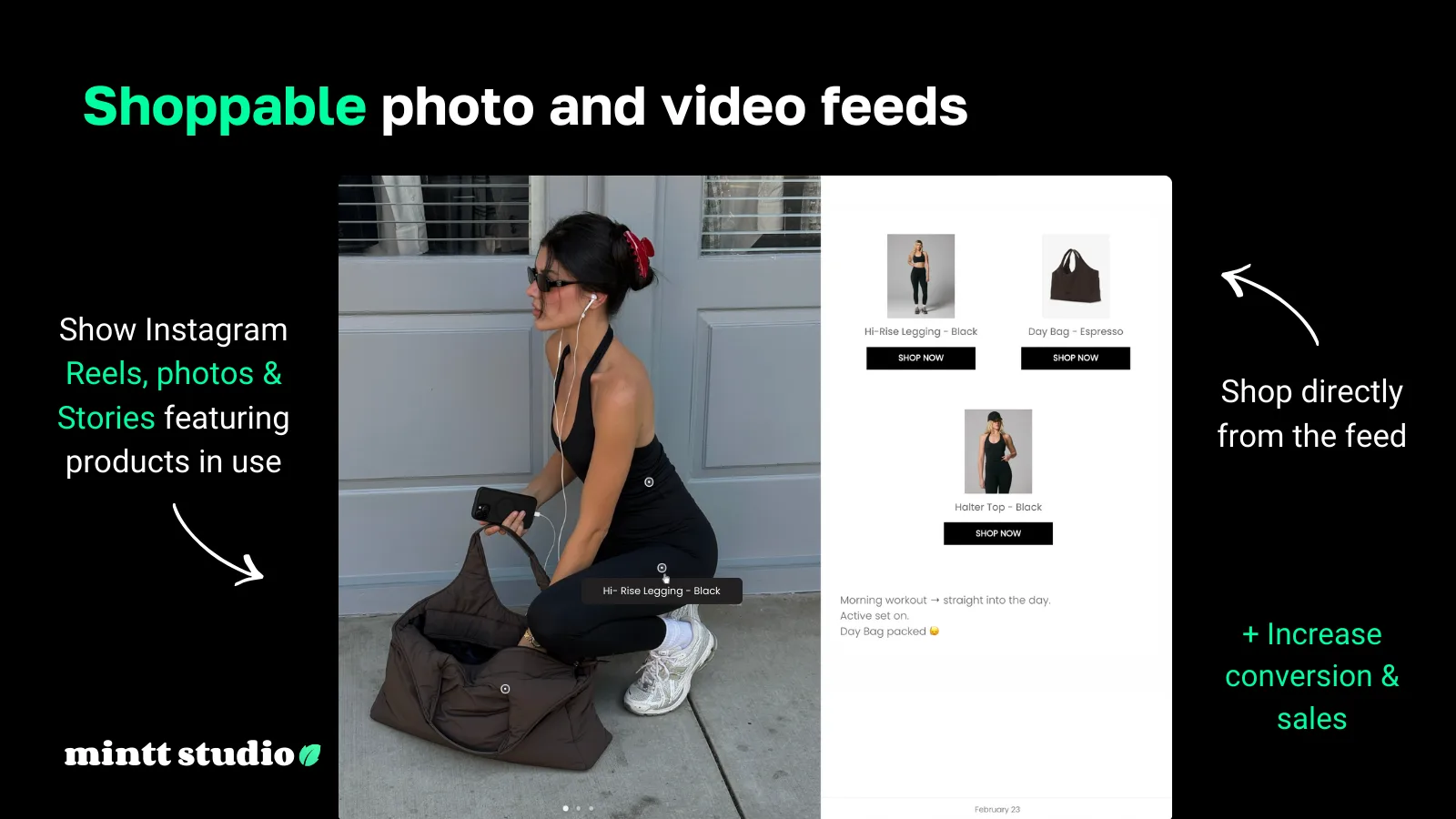
- Instagram feeds. Validate business value, configuration, edge cases, measurement, and rollback before production.
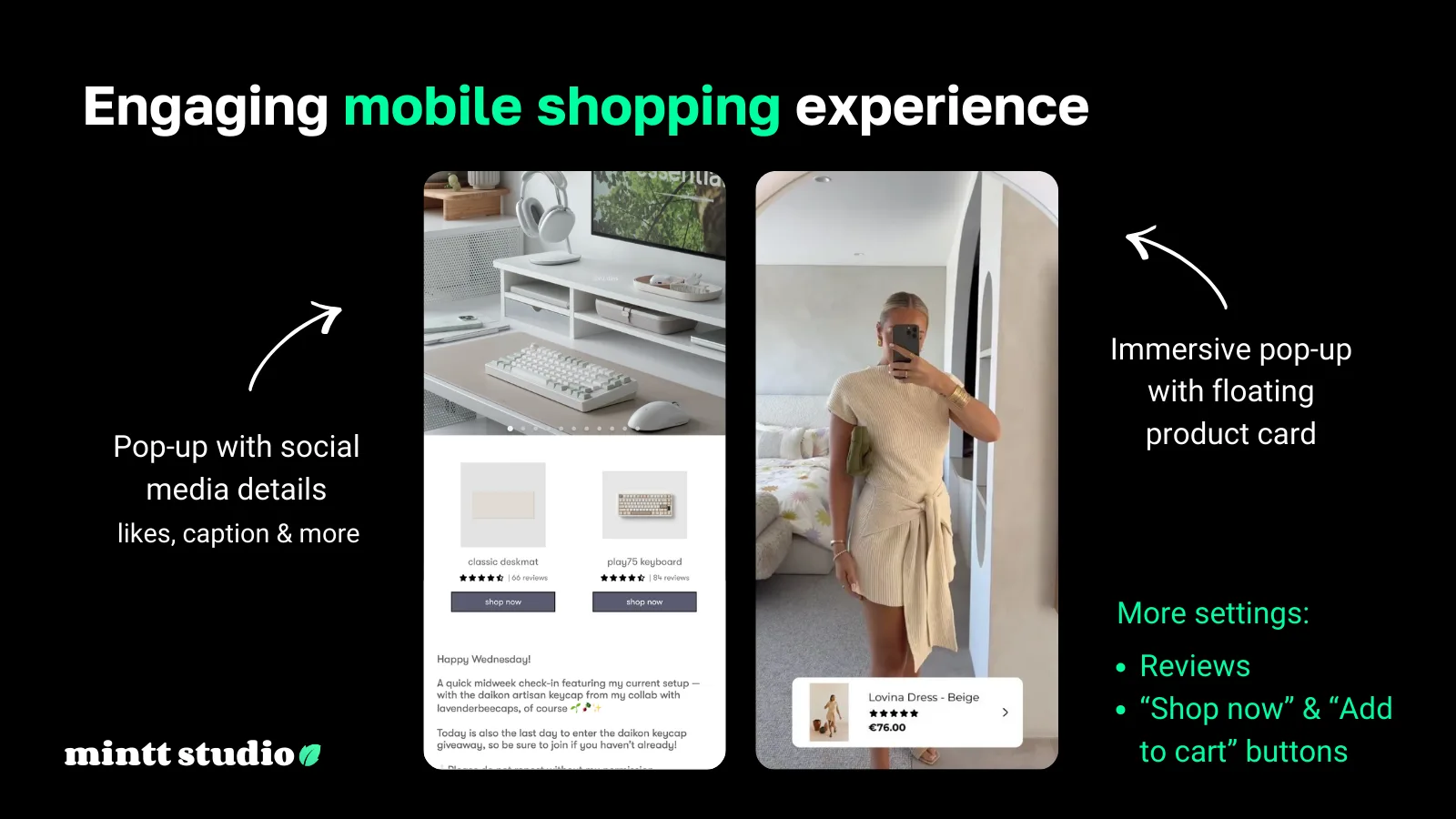
- Reels and UGC. Validate business value, configuration, edge cases, measurement, and rollback before production.
- Shoppable product tags. Validate business value, configuration, edge cases, measurement, and rollback before production.
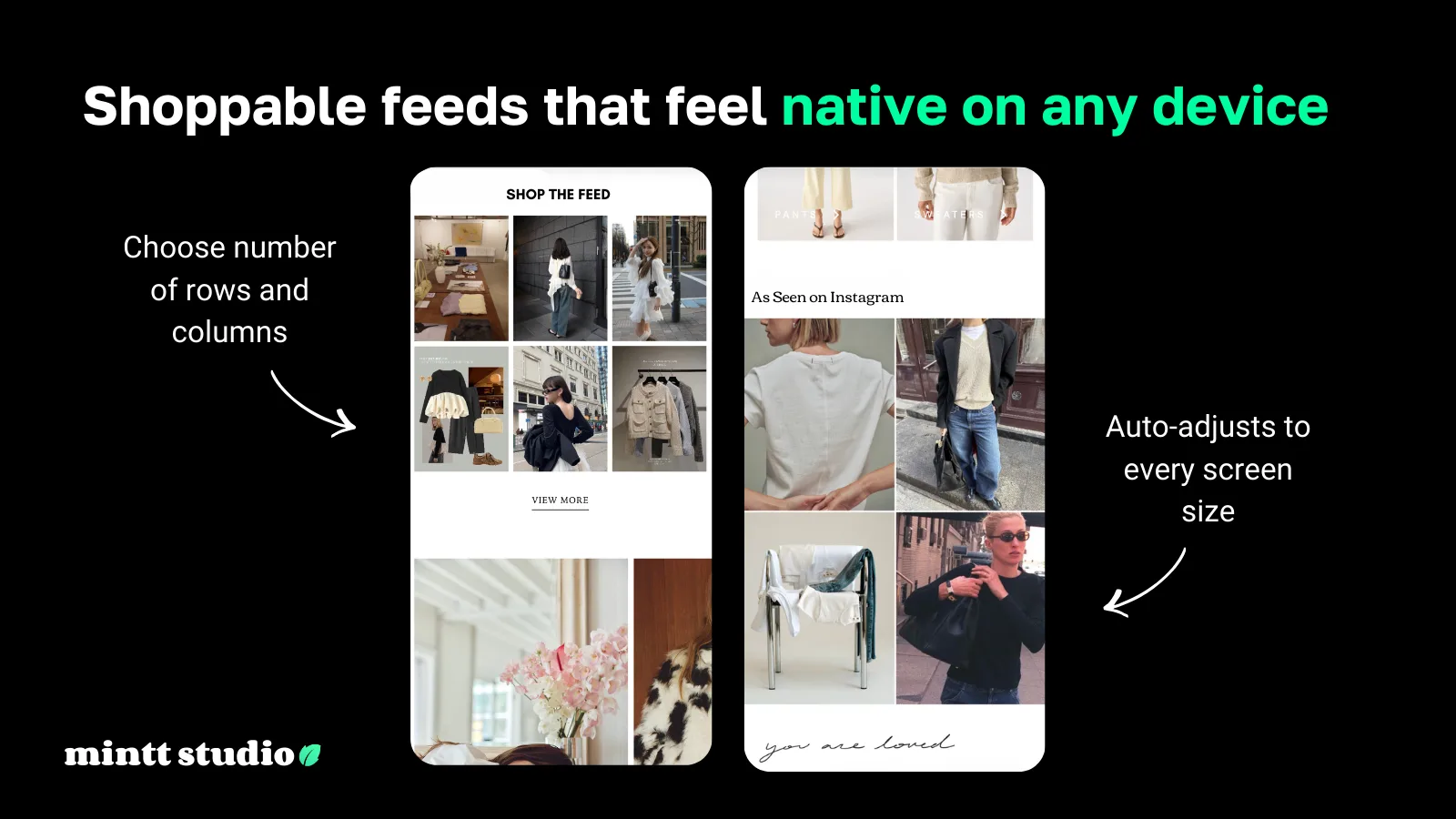
- Gallery layouts. Validate business value, configuration, edge cases, measurement, and rollback before production.
- Content controls. Validate business value, configuration, edge cases, measurement, and rollback before production.
- Engagement analytics. Validate business value, configuration, edge cases, measurement, and rollback before production.
Marques utilisant Instafeed, par grande catégorie
Une boutique publique actuelle d’une marque dans chacune des 15 grandes catégories. Utilisez-les pour comparer des marques similaires, pas comme gage de qualité.
Annuaire de marques en 15 catégories: Signal public observé le 2026-07-22. Les apps peuvent changer ; vérifiez chaque marque avant toute comparaison.
Tarifs et coût total
The subscription is only one part of total cost. Budget for implementation, design and QA, data cleanup, usage overages, training, ongoing optimization, and migration risk.
| Forfait | Prix affiché | Inclus |
|---|---|---|
| Starter | $0 | Responsive feed, Reels and photos, unlimited views, hourly sync |
| Pro | $8/month | Product tagging, shoppable actions, up to three feeds |
| Plus | $20/month | UGC, auto-tagging, content controls, analytics and unlimited feeds |
Checklist d’installation
- Define the business problem, baseline metric, owner, and rollback threshold.
- Read requested permissions and document customer and storefront data flows.
- Install on a duplicate theme or controlled test environment.
- Configure only the minimum viable workflow; avoid enabling everything at once.
- Test desktop, mobile, accessibility, translation, consent, analytics, and edge cases.
- Compare performance and conversion guardrails with the pre-install baseline.
- Launch gradually and schedule a keep-or-remove review after one full business cycle.
Opérations et UX
Assign an owner, a success metric, and a review date before launch. Record theme changes, permissions, data flows, integrations, and rollback.
- No duplicate app owns the same customer touchpoint.
- Theme blocks meet brand, accessibility, and mobile requirements.
- Automations exclude tests, refunds, staff, and ineligible customers.
- Consent and unsubscribe states work across connected channels.
- Attribution is documented and compared with Shopify reporting.
- Billing thresholds, overages, and renewals have an owner.
- Exports and rollback steps are tested before a critical campaign.
- A quarterly review confirms the app still earns its cost and complexity.
30-day evaluation plan
Days 1–3: baseline and architecture
Capture the current conversion, revenue, engagement, support, speed, consent, and operating baseline that relates to the app. List the systems that already own customer identity, catalog data, messaging, analytics, storefront rendering, and billing. Define the one problem this install must solve and the exact conditions that would trigger rollback.
Days 4–10: controlled configuration
Build the smallest usable workflow in a duplicate theme or limited audience. Reconcile imported records, product and variant mappings, time zones, currencies, markets, consent states, exclusions, templates, translations, and analytics events. Ask someone who did not configure the app to run the QA script and document every defect.
Days 11–24: phased production test
Release to the smallest practical segment. Watch vendor errors, Shopify events, page speed, customer support contacts, unsubscribe or opt-out rates, attribution differences, fulfillment exceptions, and billing usage. Keep a contemporaneous decision log so a result can be explained rather than reconstructed later.
Days 25–30: keep, change, or remove
Compare the primary outcome and guardrails with the baseline. Separate incremental value from revenue the store would have received anyway. Keep the app only if the measured benefit exceeds subscription, usage, implementation, operating, support, and switching cost with a reasonable margin of safety.
ROI and measurement model
Use a metric tied to the app category: incremental conversion or review coverage for social proof; attributable retained margin for lifecycle messaging; qualified payment-message engagement for financing; publish speed plus page conversion for builders; contribution margin and on-time delivery for print on demand; or validated friction removed for analytics. Pair the primary metric with guardrails such as refund rate, complaint rate, unsubscribe rate, page speed, support tickets, accessibility defects, fulfillment delay, and staff hours.
For a defensible estimate, calculate incremental gross profit or verified labor savings, then subtract the app fee, usage fees, agency or developer work, creative production, discounts, deliverability or fulfillment expense, internal operating time, and expected migration cost. Avoid treating vendor-attributed revenue as automatically incremental; attribution windows and last-click claims can count orders that other channels also influenced.
Common failure modes and troubleshooting
- Nothing appears on the storefront. Check app-block placement, theme publication, market and product eligibility, consent state, script errors, and conflicting lazy-loading or optimization tools.
- Data does not match Shopify. Compare identifiers, time zones, currencies, refund handling, sync latency, attribution windows, filters, and whether draft or test records are included.
- Customers receive duplicate or incorrect experiences. Audit overlapping apps, automation entry and exit rules, suppression lists, product or variant mapping, inventory events, and retry behavior.
- Performance regresses. Identify new requests, JavaScript execution, media weight, third-party failures, layout movement, and pages where the capability is unnecessary. Disable optional modules before removing the whole app.
- The uninstall leaves residue. Inspect theme app embeds, snippets, assets, pixels, customer events, webhooks, metafields, DNS records, external automations, API tokens, retained data, and recurring billing.
Performance de la boutique
Measure product, collection, and cart pages before and after installation. Check Core Web Vitals, script requests, layout shift, mobile behavior, and whether widgets load after consent.
Confidentialité et consentement
Map every customer field and browser identifier the app receives. Confirm lawful basis, consent behavior, retention, deletion and export workflows, sub-processors, and regional requirements.

Support et responsabilités
Define ownership for vendor support, incident escalation, billing, release QA, and configuration backups. Test the support route before a campaign or migration.
Avantages
- Instagram feeds
- Reels and UGC
- Shoppable product tags
Limites
- Instagram API and account dependency. Assign an owner, mitigation, monitoring signal, and rollback threshold.
- Media performance and layout stability. Assign an owner, mitigation, monitoring signal, and rollback threshold.
- UGC rights and moderation. Assign an owner, mitigation, monitoring signal, and rollback threshold.
Alternatives
- Socialwidget — compare workflow depth, price unit, portability, performance, data model, support, and switching cost.
- Covet Instagram Feed & Reviews — compare workflow depth, price unit, portability, performance, data model, support, and switching cost.
- Section Store — compare workflow depth, price unit, portability, performance, data model, support, and switching cost.
Migration et désinstallation
Export portable data first, document placements and automations, test the replacement in a duplicate theme, then uninstall. Confirm scripts, pixels, app blocks, webhooks, data, and billing are removed or intentionally retained.
Questions fréquentes
Is Instafeed worth it for Shopify?
Instafeed can be worth it when its social proof and image galleries workflow solves a measured problem and replaces enough manual work or overlapping software. Use a controlled test and keep/remove threshold instead of popularity alone.
How much does Instafeed cost?
The official listing currently starts at $0. Total cost can include usage, contacts, orders, messages, implementation, design, integrations, training, and migration. Recheck before subscribing.
Does Instafeed offer a free plan?
A free option is currently listed. Free does not mean zero operating cost: implementation, QA, data governance, and optimization still require time.
What does Instafeed actually do?
Instafeed focuses on social proof and image galleries. Enable only capabilities tied to a measurable merchant workflow.
How long does setup take?
A basic install may be quick, but production setup includes permissions, configuration, mobile QA, consent, analytics, edge cases, and rollback. Plan hours to days depending on integrations and migration.
Will Instafeed slow down a Shopify store?
Any storefront app can affect performance. Compare field and lab metrics before and after installation; inspect scripts, media, widgets, and tag-manager overlap.
What data and permissions should merchants review?
Review scopes, customer and order fields, browser identifiers, tracking, retention, deletion and export, sub-processors, hosting, and consent behavior.
Can Instafeed work with an existing stack?
Usually, but overlap can create duplicate messages, conflicting widgets, attribution discrepancies, extra scripts, and cost. Map system ownership and run integration tests.
What are the main alternatives?
Compare the alternatives below by workflow fit, pricing unit, portability, support, performance, data model, and switching cost rather than ratings alone.
How should a merchant measure ROI?
Choose one primary outcome and guardrails. Measure incremental revenue or time saved against software, service, overage, implementation, and risk cost.
Can I migrate away later?
Yes, if portability is planned early. Export data and configuration, test a replacement, then verify scripts, webhooks, pixels, billing, and retained data after uninstall.
What should I test before launch?
Test desktop and mobile, accessibility, translations, consent, analytics, load behavior, errors, discounts, refunds, eligibility, suppression, and rollback.
Sources et date de vérification
Independent editorial review. ShopEyes is not Shopify and does not claim private install data. Rankings and reviews are not influenced by sponsors. Sponsored placements are clearly labeled. Vérifié le: 2026-07-22.